
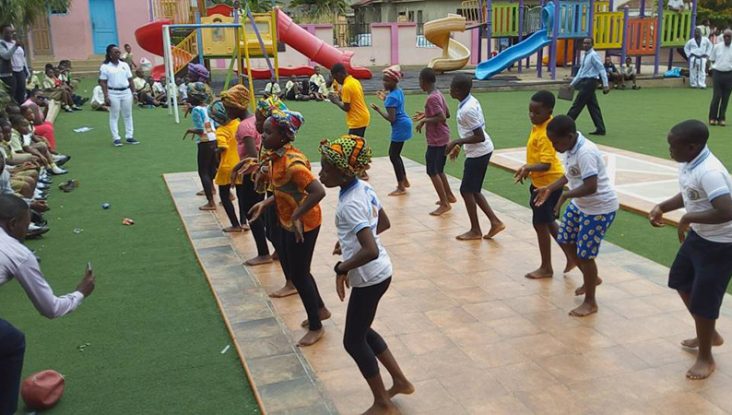

Dance education has important benefits for students’ social relationships, particularly among genders and age groups. Many forms of dance, including ballroom, are inherently social.
They involve moving together in synchrony and empathy, with direct physical contact. In an evaluation of Dancing Classrooms in New York City, 95 percent of teachers said that as a result of dancing together, there was a demonstrable improvement in students’ abilities to cooperate and collaborate. In a survey in Los Angeles, 66 percent of school principals said that after being in the program, their students showed an increased acceptance of others, and 81 percent of students said they treated others with more respect. Dance has economic benefits, too. As well as being a field of employment, dance promotes many of the personal qualities that employers recognize as essential in a collaborative, adaptable workforce.
One principal was especially impressed by the improvements in reading and math scores among her fifth-grade students. “There are no ifs, ands, or buts about the program’s impact in the academic lives of our children,” says Lois Habtes of the Emanuel Benjamin Oliver Elementary School in the Virgin Islands. “When I first got here, they were failing scores. Last year — our second year in the program — they got up to 83 percent. This year, our fifth grade scored 85 percent on the reading test, the highest in the school.”
Most children in public schools in the US receive some education in music and visual arts, patchy though it often is. But dance and theater are mostly seen as second-class citizens, and opportunities in the arts, in general, are lowest for students in areas of high poverty. “There are still millions of students who do not have access to any arts instruction. Many of them are in our poorer communities where the programs are arguably needed the most,” says Bob Morrison, the founder and director of Quadrant Research.
Source: TED-Ed blog


